Recent Enforcement Activities – Lessons Learned
24 November 2026
Enforcement activity is a useful reminder that data protection compliance is not about having policies on paper. It is about being able to demonstrate that the right things are happening in practice.
Looking across recent enforcement activity, several practical lessons stand out, providing valuable insights for those using personal information to review, reflect and update their own practices.
1. Timely Data Subject Access Requests responses
Organisations must have effective procedures and appropriate resources in place to ensure that Data Subject Access Requests (DSARs) are acknowledged, assessed and responded to promptly and within the applicable statutory timeframes. This includes having processes to identify requests, verify the identity of requesters where necessary, monitor response deadlines and manage any permitted extensions.
Clear escalation arrangements should also be established to prevent delays and ensure that requests are not overlooked or unnecessarily prolonged.
Read our Individual Rights guidance here
2. Reasonable and proportionate searches
Organisations must undertake reasonable and proportionate searches across all relevant systems and locations to identify personal data falling within the scope of a DSAR. This should include consideration of both electronic and physical records, shared drives, email accounts, collaborative platforms, archived material and other relevant storage locations.
Search methodologies should, documented and be appropriate to the nature and scope of the request, with sufficient consideration given to whether additional searches are necessary to ensure that responses are complete and accurate.
Read our Data Controller & Processor Duties guidance here
3. Accurate record keeping
Organisations should maintain clear, consistent and auditable records of the steps taken to manage DSARs and other data protection obligations. Records should include details of searches undertaken, systems and locations reviewed, decisions made, exemptions considered, redactions applied and the rationale supporting those decisions.
Maintaining a comprehensive audit trail enables organisations to demonstrate accountability, evidence the appropriateness of their actions and respond effectively to regulatory enquiries or challenges from individuals.
Read our Individual Rights guidance here
4. Transparency and justification
Any redactions, withholding of information or exemptions applied when responding to DSARs must be carefully considered, appropriately documented and supported by a valid legal justification. Where information is withheld, individuals should be provided with an appropriate explanation, subject to any applicable legal restrictions.
This helps promote transparency, supports individuals' rights and demonstrates that decisions have been made fairly and lawfully.
Read our Individual Rights guidance here
5. Clear roles and responsibilities
Data Processing Agreements must clearly distinguish between the respective obligations of data controllers and data processors. Agreements should specify responsibilities for handling DSARs, identifying and reporting personal data breaches, maintaining appropriate security measures, supporting compliance activities and responding to regulatory requests.
Clear allocation of responsibilities helps avoid ambiguity, reduces the risk of non-compliance and ensures that all parties understand their respective obligations under data protection legislation.
Read our Data Controller & Processor Duties guidance here
6. Effective policies and procedures
Organisations must establish and maintain appropriate policies, procedures and operational controls governing the management, retention and disposal of personal data, physical assets and digital material. These should address the secure storage, access, transfer, archiving and eventual destruction of information, ensuring that personal data is not retained for longer than is necessary and is disposed of securely when no longer required, as per the retention schedule.
Policies should be regularly reviewed to reflect changes in legislation, technology, organisational structures and operational practices. Importantly, documented procedures must be translated into consistent day-to-day practice.
Read our Data Controller & Processor Duties guidance here
7. Staff training, awareness and competence
Relevant personnel, including Data Protection Officers (DPOs), managers, IT teams and staff involved in handling personal data or responding to DSARs, must receive appropriate training to understand and fulfil their data protection responsibilities. Training should cover key legislative requirements, individual rights, request-handling procedures, information security, confidentiality, exemptions and escalation arrangements.
Organisations should also provide periodic refresher training and maintain evidence of attendance and completion.
This helps ensure that data protection responsibilities are understood throughout the organisation and embedded within its working culture.
Read our Data Controller & Processor Duties guidance here
7. Evidence of compliance and corrective action
Organisations must be able to demonstrate not only that appropriate policies and procedures exist, but also that they are being implemented effectively. This includes retaining evidence of corrective actions, implementation plans, staff training, policy reviews, system improvements and any remedial measures introduced following audits, incidents or regulatory findings. Actions should be assigned to clearly identified owners, supported by appropriate timescales and monitored through to completion.
Where necessary, organisations should undertake follow-up reviews or testing to verify that improvements have been effective and that identified weaknesses have been adequately addressed.
Read our Data Controller & Processor Duties guidance here
Overall takeaway
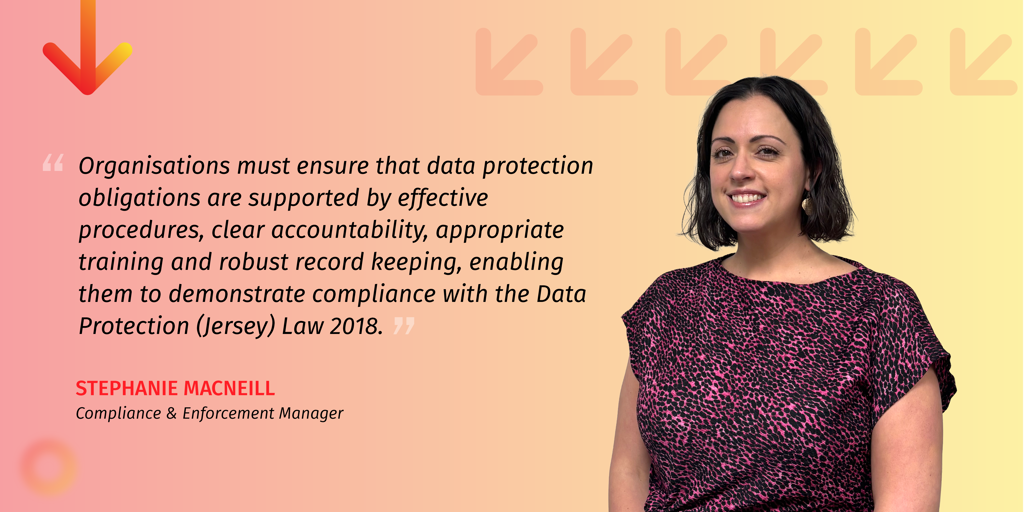
Organisations must ensure that their data protection obligations are supported by effective governance arrangements, clearly defined roles and responsibilities, proportionate operational procedures, appropriate staff training and robust record-keeping practices. Compliance should not simply be demonstrated through the existence of policies and documented processes; organisations must also be able to evidence that these arrangements are understood, consistently applied, regularly reviewed and effective in practice.
A key principle underpinning all these requirements is accountability: organisations should be able to demonstrate that they have taken appropriate, reasonable and proportionate steps to comply with their legal obligations, protect individuals' rights and address any identified deficiencies. This requires a proactive and continuous approach to data protection management rather than a reactive response to regulatory scrutiny or individual complaints.